Profitability
Why Can a Dental Practice Generate High Revenue but Low Profit?
Learn why revenue alone does not guarantee profitability and how hidden costs can reduce the money a practice actually keeps.
Imagine a dental practice generating hundreds of thousands—or even millions—of dollars in annual revenue. The appointment book is full. Patients keep coming in. Treatment rooms are busy all day.
From the outside, the business appears highly successful.
Yet at the end of every month, the practice owner faces a frustrating reality: very little money is actually left.
This situation is far more common than most dentists realize. Many practices mistake revenue for profitability and make important business decisions based on financial metrics that don't tell the whole story.
That's why every practice owner should ask one simple question:
Revenue and Profit Are Not the Same Thing
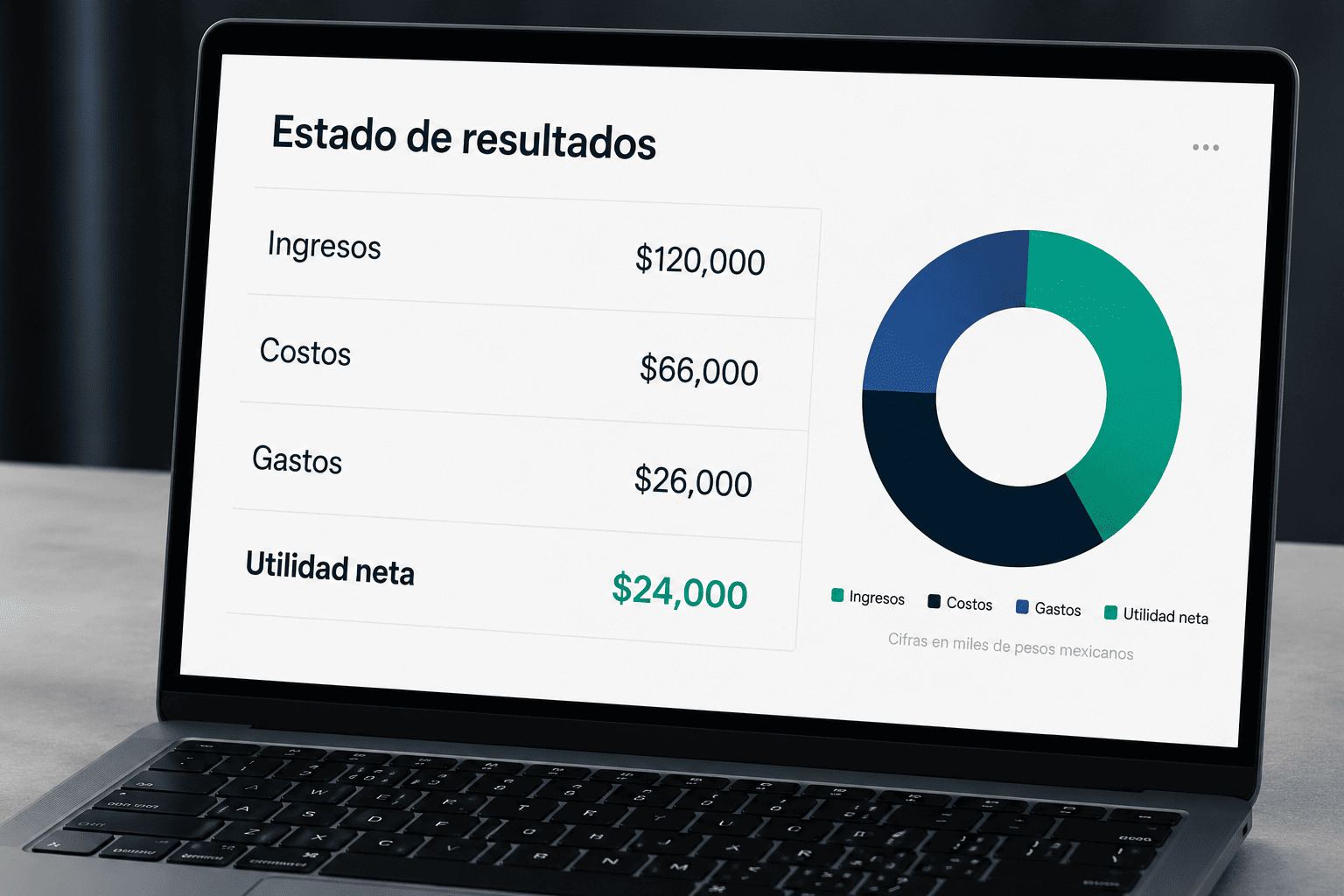
Revenue is the money your practice brings in.
Profit is what's left after paying every expense required to deliver patient care and operate the business.
It may sound like a subtle distinction.
In reality, it's one of the most important concepts in practice management.
Two dental practices can generate exactly the same annual revenue. Yet one may end the year significantly more profitable than the other.
The difference isn't how much they produce. It's how well they manage costs, resources, pricing, and operational efficiency.
- Practice A High revenue · weak margin Strong production, but high costs and low profitability.
- Practice B Same revenue · stronger margin Better cost control, pricing, productivity, and resource allocation.
The Illusion of a Fully Booked Schedule
Many dentists associate a busy appointment book with financial success. While a healthy patient flow is essential, it doesn't automatically translate into higher profits.
In fact, a packed schedule can hide serious financial problems, including:
- Underpriced treatments
- Low-margin procedures
- Excess staffing
- High operating expenses
- Inefficient use of chair time
A practice can work longer hours, treat more patients, and still earn far less profit than expected.
Activity is not the same as profitability.
The Biggest Problem: Not Knowing the True Cost of Treatment
This is perhaps the most common reason profitable-looking practices struggle financially.
Most dentists know exactly what they charge for each procedure.
Far fewer know what those procedures actually cost.
Without understanding the true cost of treatment, it's impossible to know how much money the practice is genuinely making.
A procedure with a high fee may appear extremely profitable. But once every associated cost is included, the actual margin may be much smaller than expected.
- Known Treatment fee Most practices know exactly what they charge.
- Unknown True treatment cost Many practices do not know the full cost required to deliver that procedure.
The Hidden Costs That Reduce Profit
When dentists think about treatment costs, they usually consider only direct expenses such as:
- Clinical materials
- Laboratory fees
- Specialist commissions
But every practice also carries numerous indirect costs, including:
- Office rent
- Utilities
- Internet
- Practice management software
- Sterilization
- Equipment maintenance
- Marketing
- Front desk staff
- Administrative salaries
- Insurance
- Taxes
These expenses exist regardless of how many patients are treated.
If they aren't properly allocated across procedures, profitability is almost always overstated.
The "Star Treatment" Isn't Always the Most Profitable
Every dental practice has procedures that seem to generate the highest income.
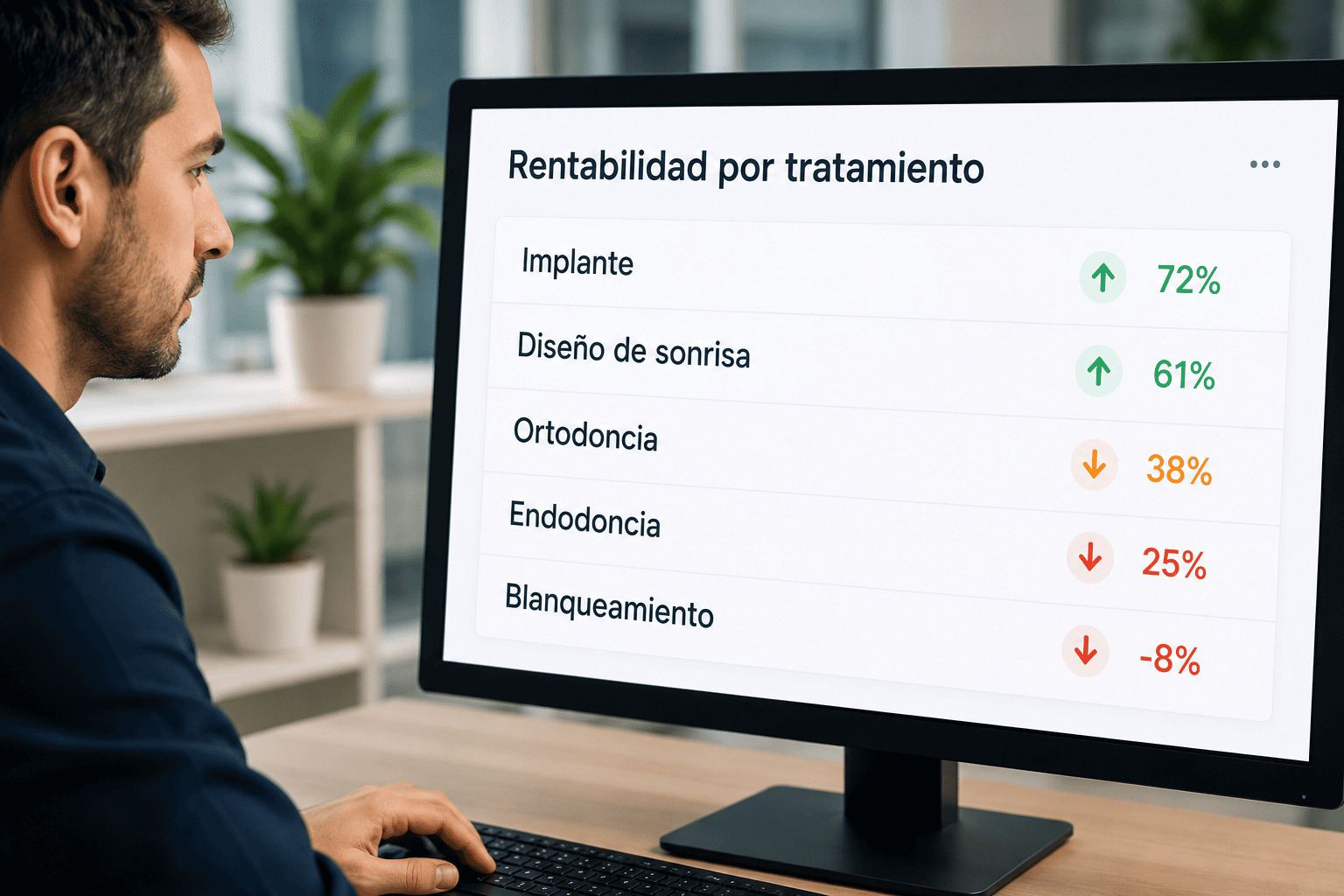
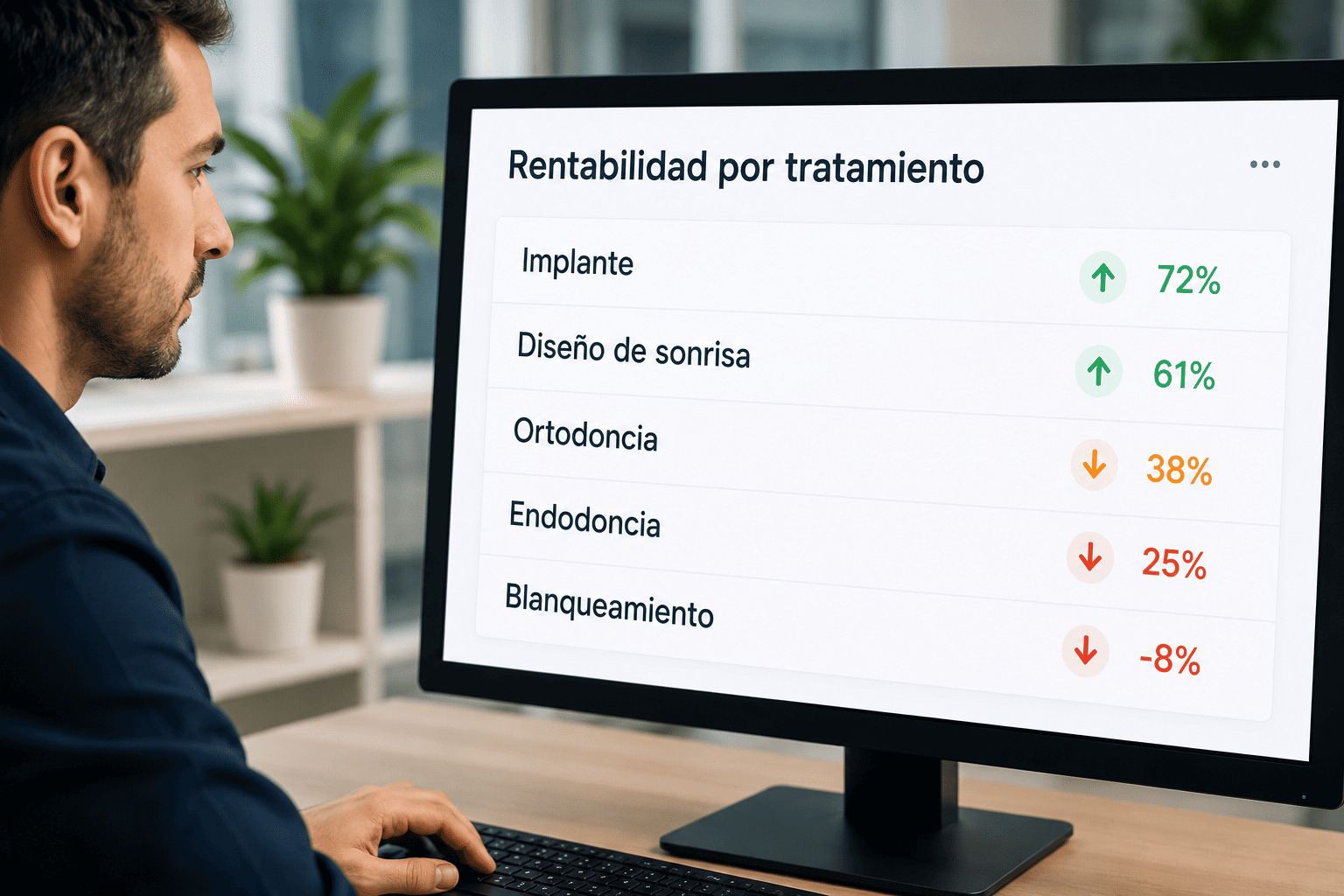
Surprisingly, many of these treatments turn out to be far less profitable than expected once their full costs are analyzed.
Why?
Because some procedures consume significantly more:
- Chair time
- Specialist involvement
- Administrative support
- Practice resources
- Overhead
A treatment with impressive revenue can sometimes produce less profit than a shorter, simpler procedure. Revenue alone doesn't tell the whole story.
Growth Can Actually Make the Problem Worse
Many practice owners believe that attracting more patients will automatically solve financial challenges.
Sometimes that's true. Often it isn't.
If your pricing is inaccurate or your margins are too low, increasing patient volume simply magnifies the problem.
Your team works harder. The practice becomes busier. Operating costs increase. Yet profitability barely improves.
- Weak margin More volume If each procedure contributes too little, more patients can multiply the same problem.
- Strong margin Healthier growth When costs and pricing are controlled, growth has a better chance of improving profit.
Growth without financial visibility can become an expensive trap.
Chair Time Is One of Your Most Valuable Assets
Time is one of the most valuable resources in any dental practice.
Unfortunately, it's often overlooked when evaluating profitability.
Two procedures may generate similar revenue.
However, if one requires four times as much chair time, its financial contribution is completely different.
Highly profitable practices understand exactly how much value they generate per hour of clinical production.
They don't evaluate procedures solely by revenue. They evaluate how efficiently each procedure uses the practice's most valuable resources.
- Procedure A $600 in 45 minutes Potentially stronger clinical-hour productivity.
- Procedure B $600 in 3 hours Same revenue, but a very different operational impact.
Are You Spending Too Much to Acquire Patients?
Another common reason practices struggle with profitability is patient acquisition cost.
Today's dental practices invest heavily in:
- Google Ads
- Social media advertising
- SEO
- Content marketing
- Marketing agencies
- Website optimization
These investments can generate significant growth. But they must also produce an adequate return.
Attracting more patients isn't enough. Each patient should ultimately generate enough profit to justify the investment required to acquire them.
Warning Signs Your Practice May Have a Profitability Problem
Several indicators suggest your practice may not be as profitable as it appears.
- Revenue keeps growing, but cash doesn't
- You don't know the profit margin of each procedure
- Everyone is working harder than ever
- Reinvesting always feels difficult
- Small cost increases have a big impact
If several of these situations sound familiar, your practice may have significant opportunities for financial improvement.
The Most Profitable Practices Don't Focus Only on Revenue
One of the biggest differences between average practices and highly profitable ones is where they focus their attention.
Successful practice owners don't obsess solely over increasing production.
They continuously analyze:
- Costs
- Profit margins
- Productivity
- Profitability by procedure
- Profitability by provider
- Resource utilization
Because they understand a simple principle:
Financial Management Is Becoming Essential in Modern Dentistry
Clinical excellence alone is no longer enough.
Today's successful dentists also understand the financial side of running a practice.
That doesn't mean becoming an accountant.
It means having the information needed to answer critical business questions:
- Which procedures are truly profitable?
- Where is the practice losing money?
- Which fees should be adjusted?
- Which services generate the greatest value?
- How can profitability improve without increasing workload?
Those answers allow practice owners to make smarter, more confident decisions.
How Klynic Helps Improve Practice Profitability
At Klynic, we believe dentists should spend less time struggling with spreadsheets and more time making strategic decisions.
That's why we built a financial intelligence platform designed specifically for dental practices.
With Klynic, you can:
- Calculate the true cost of every procedure
- Analyze profit margins
- Identify underperforming treatments
- Build treatment plans based on real financial data
- Understand how overhead affects profitability
- Make business decisions backed by reliable numbers
Our goal isn't simply to show you how much revenue your practice generates.
Our goal is to help you understand how much profit your practice actually keeps.
Final Thoughts
A dental practice can generate impressive revenue while producing disappointing profits for one simple reason:
Revenue is not profit.
Without a clear understanding of costs, margins, productivity, and resource allocation, it's easy to mistake a busy practice for a financially healthy one.
The most successful practices aren't necessarily those with the highest production.
They're the ones that understand their numbers.
Because once you know the true cost of treatment and consistently measure profitability, you can make smarter pricing decisions, protect your margins, and build a practice that grows sustainably.
That's when real financial success begins.
How Klynic helps improve practice profitability
Klynic helps dental practices calculate true treatment costs, analyze profit margins, identify underperforming treatments, understand overhead, and make business decisions backed by reliable numbers.
- True cost per procedure
- Profit margins by treatment
- Underperforming treatment detection
- Overhead and resource visibility