Costs
How to Calculate the True Cost of a Dental Crown in Your Practice
A practical guide to understanding the full cost of crown treatment, from laboratory fees and materials to chair time, staff, overhead, and acquisition costs.
Dental crowns are among the most common restorative procedures performed in modern dentistry. When planned and executed correctly, they provide predictable clinical outcomes and long-term value for patients.
From a financial perspective, however, there's one question many dentists struggle to answer: how much does it actually cost your practice to deliver a dental crown?
Most clinicians know exactly what they charge. Far fewer know what the procedure truly costs. And that difference can have a major impact on profitability.
Before setting fees, evaluating margins, or making pricing decisions, it's essential to understand every resource involved in providing crown treatment.
The Most Common Mistake: Focusing Only on the Laboratory Fee
When dentists estimate the cost of a crown, they usually begin with the most obvious expense: the dental laboratory. That's understandable. In many cases, laboratory work represents one of the largest direct costs associated with treatment.
But laboratory fees are only one part of the equation. Several additional factors influence the true cost of a crown—and many of them are frequently overlooked.
1. Clinical Materials
Preparing and delivering a crown requires a wide range of clinical materials, including:
- Local anesthetic
- Diamond burs
- Gingival retraction materials
- Impression materials or digital scanning supplies
- Temporary crown materials
- Dental cements
- Bonding agents
- Disposable clinical supplies
Depending on the workflow and technology used, these costs can vary considerably. That's why it's important to measure actual material consumption rather than relying on generalized estimates.
2. Dental Laboratory Costs
Laboratory work is often the most visible component of crown treatment. Depending on the restoration, laboratory services may include:
- Zirconia crowns
- Porcelain-fused-to-metal crowns
- Monolithic restorations
- Implant-supported crowns
- CAD/CAM restorations
- Digital design
- Characterization and esthetic customization
The choice of laboratory, materials, and manufacturing process can dramatically influence total treatment cost. This explains why two practices providing seemingly identical crowns may have very different cost structures.
- Practice A Premium esthetic workflow Higher lab fee, more customization, possible try-in, more clinical coordination.
- Practice B Standard restorative workflow Different material, different lab process, different time and cost structure.
3. Chair Time
One of the most common mistakes is focusing only on materials and laboratory expenses. A crown procedure also requires substantial clinical time.
Typical appointments include:
- Initial examination
- Tooth preparation
- Digital scan or final impression
- Temporary crown placement
- Try-in appointment
- Final crown delivery and cementation
- Follow-up visits
Each appointment consumes valuable clinical resources. And every minute of chair time has a financial cost.
4. Clinical Team
Although the dentist performs most of the clinical treatment, several additional team members usually contribute to the case.
These often include:
- Dental assistants
- Front desk staff
- Administrative personnel
- Treatment coordinators
Some cases may also involve specialists depending on the patient's needs. Every member of the team contributes to the overall cost of treatment. Ignoring these costs almost always leads to an overly optimistic view of profitability.
5. Practice Overhead
Every dental practice has operating expenses that exist whether one crown or twenty crowns are delivered.
These include:
- Rent
- Utilities
- Internet
- Practice management software
- Sterilization
- Insurance
- Accounting services
- Licensing fees
- Equipment maintenance
- Digital technology
These expenses keep the practice operating every day. Although they don't belong exclusively to crown treatment, every procedure should contribute to covering them.
6. Patient Acquisition Costs
Restorative patients don't always arrive through referrals alone.
Many practices actively invest in attracting new patients through:
- Google Ads
- Social media marketing
- SEO
- Content creation
- Lead generation campaigns
- Marketing agencies
These investments are part of the cost of delivering treatment. Yet they're among the most commonly overlooked expenses when calculating procedure profitability.
Why Can a Crown Generate Less Profit Than Expected?
A crown often appears highly profitable simply because of its treatment fee. However, once every associated cost is included, the financial picture may change considerably.
Examples include:
- Higher laboratory fees
- Multiple appointments
- Remakes or adjustments
- Additional esthetic modifications
- High operating expenses
- Significant patient acquisition costs
If these variables aren't considered, the actual profit margin may be much smaller than expected.
Why Profit per Clinical Hour Matters
Two crown cases may generate similar revenue. That doesn't mean they generate the same value.
Some cases require:
That's why high-performing practices evaluate more than treatment fees. They also measure how much value each clinical hour produces.
Understanding profitability from both financial and operational perspectives leads to much better business decisions.
Why Excel Eventually Stops Working
Many dentists begin by estimating costs and pricing with spreadsheets. Initially, this approach works well.
As practices grow, however, complexity increases rapidly. Variables quickly multiply:
- Multiple laboratories
- Different crown materials
- Multiple practice locations
- Several providers
- Changing operating expenses
- Variable productivity
Keeping spreadsheets accurate becomes increasingly time-consuming. Even small calculation errors can lead to poor pricing decisions and declining profitability.
So, How Do You Know If a Crown Is Truly Profitable?
The answer goes far beyond comparing the laboratory invoice with the treatment fee.
A complete financial analysis should include:
- Clinical materials
- Laboratory costs
- Chair time
- Staff costs
- Practice overhead
- Patient acquisition expenses
- Actual profit margin
Only when every one of these factors is measured together can you understand the true profitability of crown treatment.
How Klynic Helps Dental Practices Calculate the True Cost of Crown Procedures
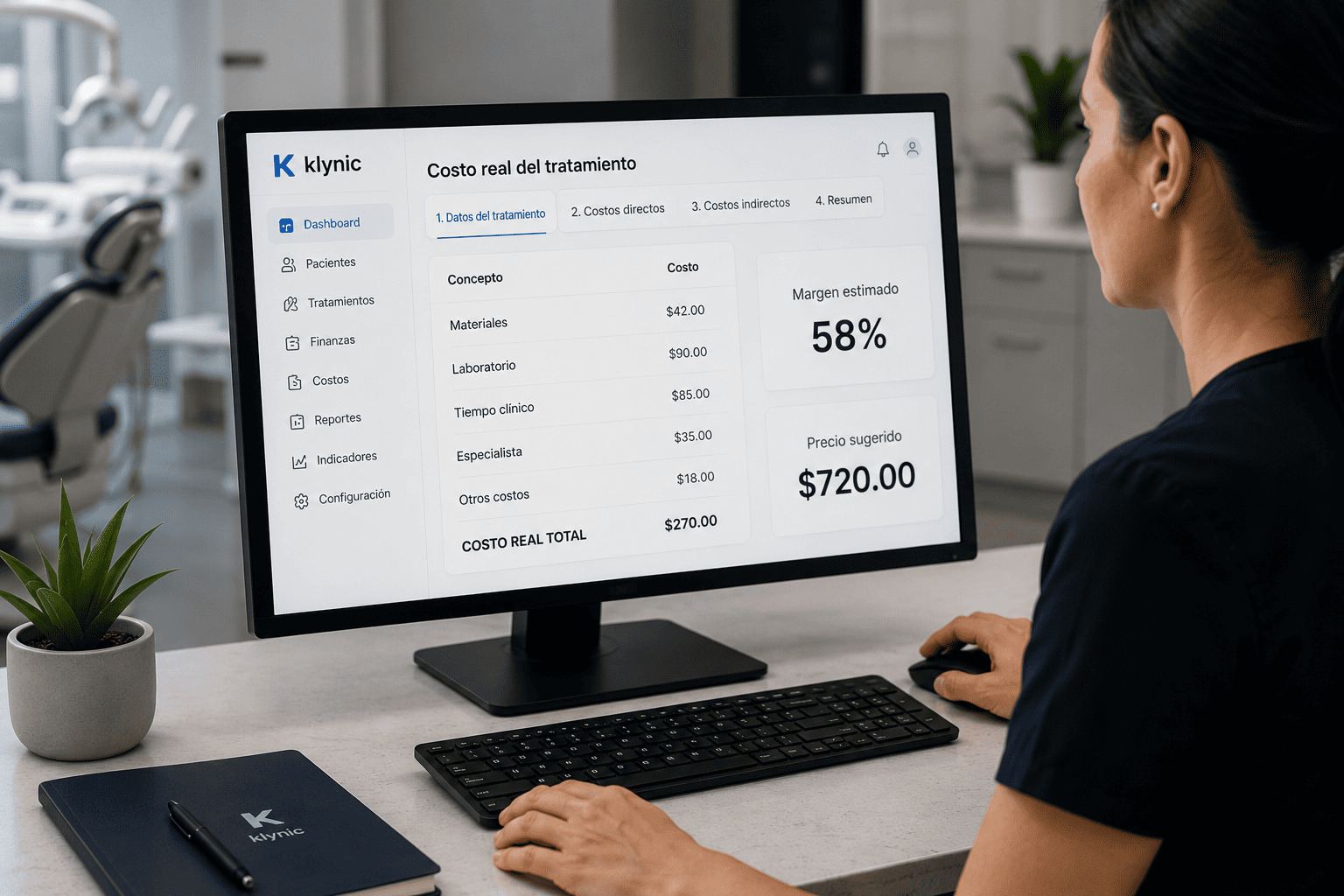
At Klynic, we believe dentists should have complete financial visibility without relying on complicated spreadsheets. That's why we developed a financial intelligence platform built specifically for dental practices.
With Klynic, you can:
- Calculate the true cost of every procedure
- Include materials and laboratory expenses
- Measure actual chair time
- Account for staff and specialist participation
- Allocate overhead intelligently
- Analyze profit margins
- Build treatment plans based on real financial data
- Identify procedures with declining profitability
Our goal isn't simply to tell you what a crown costs. Our goal is to help you understand how every restorative procedure contributes to the long-term financial performance of your practice.
Final Thoughts
Calculating the true cost of a dental crown involves much more than adding together laboratory fees and clinical materials.
It also requires understanding the financial impact of chair time, staffing, operating expenses, and patient acquisition.
Practices that measure these factors make better pricing decisions, improve profitability, and build stronger, more sustainable businesses.
Because ultimately, a crown shouldn't be evaluated only by the revenue it generates. It should be evaluated by the value—and long-term profit—it creates for your practice.
How Klynic helps dental practices calculate the true cost of crown procedures
Klynic helps dental practices calculate the real cost of crown treatment by including materials, laboratory expenses, chair time, staff participation, overhead, and profit margins.
- True cost per crown procedure
- Laboratory and material cost analysis
- Chair time and staff allocation
- Profitability per restorative treatment