
The 5 Essential Components of the True Cost of a Dental Procedure
Understand the five components that make up the real cost of a dental procedure and why they matter for profitability.

Most dental professionals know how much they charge for a procedure. Far fewer know what that procedure actually costs. And that difference can have a significant impact on the financial health of a practice.
Many clinics calculate costs by adding up materials and laboratory fees. While that's a good starting point, it only tells part of the story.
The true cost of a dental procedure includes every resource required to deliver high-quality patient care. Understanding those costs is essential for setting sustainable fees, protecting profit margins, and making informed business decisions.
The true cost is bigger than the materials list
Materials, laboratory fees, surgical consumables, and direct clinical expenses.
Chair time, staff, facilities, overhead, software, and administrative support.
The profit left after every resource required to deliver care is included.
1. Direct Costs
Direct costs are the expenses that can be directly attributed to a specific treatment.
These typically include:
These are usually the easiest costs to identify because they are directly consumed during the procedure.
However, they rarely represent the total cost of treatment.
Direct costs are only the starting point
A treatment may look profitable when only materials and lab fees are included, but the real margin can change significantly once time, staff, overhead, and acquisition costs are added.
2. Clinical Chair Time
Time is one of the most valuable—and often underestimated—resources in any dental practice.
Every minute a patient occupies a treatment room has a financial cost.
Whether the procedure is highly profitable or not, the practice continues paying for facilities, equipment, staff, utilities, and other overhead expenses.
That's why two procedures using similar materials can generate very different profits if one requires significantly more chair time than the other.
Understanding the financial value of clinical time is fundamental to pricing treatments accurately.
Similar materials, but less clinical capacity consumed.
Same-looking direct cost, but a weaker financial contribution per hour.
3. Clinical and Administrative Staff
A dental procedure rarely involves only the dentist.
Depending on the treatment, several team members contribute to patient care, including:
Each professional invests time and resources into the patient's experience.
Ignoring these labor costs often leads to pricing decisions that underestimate the true investment required for each procedure.
4. Practice Overhead
Every dental office has operating expenses that cannot be assigned to a single treatment but are essential for keeping the practice running.
Examples include:
Although these expenses don't appear on an individual patient's invoice, they must ultimately be covered by the treatments performed.
A profitable pricing strategy distributes these overhead costs appropriately across all clinical procedures.
Overhead does not disappear because it is invisible
Rent, utilities, software, insurance, licensing, accounting, and maintenance are not tied to one specific patient, but every procedure must help pay for them.
5. Patient Acquisition Costs
One of the most overlooked components of treatment cost is the expense of acquiring new patients.
Modern dental practices often invest in:
If a patient chooses your practice because of these investments, a portion of those marketing expenses should be considered when evaluating the profitability of the treatment.
Ignoring patient acquisition costs can create the illusion that procedures are more profitable than they actually are.
The hidden path from fee to real profit
Patient fee → direct costs → chair time → staff → overhead → acquisition cost → facility costs → real profit.
A Practical Example
Imagine a treatment with the following direct costs:
Total direct cost: €550
At first glance, the calculation seems straightforward. But this still does not show the full cost.
Now consider everything else involved:
Once these factors are included, the actual cost of providing that treatment could easily increase to €800, €900, or even more.
That difference can completely change how profitable the procedure really is.
How Do You Know If a Procedure Is Truly Profitable?
Profitability is about much more than comparing cost versus price.
A comprehensive analysis should also consider:
Sometimes a procedure with a smaller margin generates greater overall profitability simply because it requires less chair time and fewer resources.
Conversely, some of the most popular treatments may consume a disproportionate amount of the practice's capacity while contributing relatively little to overall profit.
Why Spreadsheets Eventually Become a Problem
Many dentists start by managing costs with spreadsheets.
In the early stages, Excel can work well.
However, as the practice grows, complexity increases.
New variables quickly emerge:
Maintaining accurate calculations becomes increasingly difficult.
Even small changes often require updating formulas across multiple worksheets, increasing the risk of errors and inconsistent data.
What the Most Profitable Dental Practices Do Differently
High-performing dental practices have one thing in common:
They don't price treatments based on intuition.
They rely on data.
They know:
That level of visibility allows them to grow with confidence while avoiding costly pricing mistakes.
Making Dental Cost Calculations Easier
Calculating the true cost of every procedure manually becomes increasingly challenging as a practice grows.
Multiple providers, indirect expenses, specialist fees, treatment combinations, and overhead allocation all add complexity.
That's why many modern dental practices are moving toward specialized financial management platforms.
Instead of relying on complicated spreadsheets, these systems provide clear visibility into:
Most importantly, they allow practice owners to make decisions based on real financial data rather than assumptions.
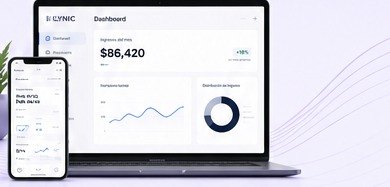
How Klynic Helps Dental Practices Calculate Their True Costs
Klynic was built specifically for dentists and dental practices that want complete visibility into their financial performance.
With Klynic, you can:
The goal isn't simply to know what a procedure costs.
It's to understand how every treatment contributes to the overall profitability and long-term sustainability of your practice.
Final Thoughts
Calculating the true cost of a dental procedure goes far beyond adding up materials and laboratory fees.
Every treatment consumes valuable resources, including:
When all these components are measured accurately, dental practices can establish more sustainable pricing, protect their margins, and make smarter business decisions.
Because ultimately, the healthiest dental practice isn't the one with the highest revenue.
It's the one that understands its numbers.
The true cost of a procedure is the foundation of profitable dentistry
Klynic helps dental practices replace assumptions with accurate treatment costs, margin visibility, minimum profitable fees, and better financial decisions.
How Klynic helps dental practices calculate their true costs
Klynic helps dental practices calculate the real cost of every procedure by including materials, specialist fees, chair time, overhead, margins, and treatment plan profitability.
- True cost per procedure
- Materials, specialist fees and chair time
- Intelligent overhead allocation
- Profit margins and underperforming procedures
Ready to understand the true cost of every procedure?
Discover how Klynic helps dental professionals calculate real treatment costs, identify opportunities to improve profitability, and make smarter financial decisions.
Request a free demo