
How Much Monthly Profit Should a Dental Practice Make?
A practical guide to understanding whether your dental practice is keeping enough profit each month to pay owners, reinvest, and grow sustainably.
Many dental practice owners ask the same question: how much profit should my practice make each month? It sounds simple, but the answer depends on much more than monthly revenue.
A practice may produce strong collections and still keep disappointing profit. Another practice may generate less revenue but remain financially healthier because it has better margins, lower overhead, and stronger cost control.
Monthly profit is one of the clearest indicators of financial health because it shows whether the practice can pay expenses, compensate owners, reinvest, and grow without constant financial pressure.
Monthly profit is not what the practice produces. It is what the practice keeps.
The money collected from patients and treatment activity.
The cost of delivering care and operating the business.
The amount left after costs, overhead, payroll, and operating expenses.
What Does Monthly Profit Mean in a Dental Practice?
Monthly profit is the money remaining after the practice pays the expenses required to operate and deliver patient care.
It is different from revenue, production, collections, and cash in the bank. Monthly profit should reflect the real economic performance of the practice after costs are considered.
A useful monthly profit analysis should answer:
Revenue and Monthly Profit Are Not the Same Thing
Revenue shows how much money comes into the practice. Monthly profit shows how much is left after the cost of generating that revenue.
This distinction matters because a practice can increase production while also increasing material costs, payroll, marketing, laboratory expenses, and overhead.
If costs grow at the same speed as revenue—or faster—the practice may become busier without becoming more profitable.
More revenue does not automatically mean more monthly profit
The practice must understand whether additional production creates enough margin after variable costs, overhead, and clinical time are included.
The Expenses That Reduce Monthly Profit
Monthly profit depends heavily on the accuracy of expense tracking. Many practices underestimate costs because they focus only on the most visible expenses.
Important monthly expenses include:
When these expenses are not understood clearly, owners may overestimate profitability and make pricing, hiring, or investment decisions based on incomplete information.
What Has the Biggest Impact on Monthly Profit?
Monthly profit is influenced by more than how many patients are treated. It depends on pricing, productivity, cost control, patient acquisition, and procedure mix.
Key profit drivers include:
This is why two practices with similar monthly revenue can end the month with very different profits.
Owner Compensation vs. Practice Profit
One of the most common sources of confusion is mixing owner compensation with business profit. A dental practice may appear profitable only because the owner is underpaying themselves.
A financially healthy practice should be able to compensate owners fairly and still generate enough profit to reinvest and build resilience.
Important questions include:
A practice is not truly profitable if it only works when the owner is underpaid
Owner compensation should be treated clearly, so the practice can understand whether the business itself is financially healthy.
Monthly Profit Should Support Reinvestment
Profit is not only money left over. It is what allows the practice to improve, adapt, and grow.
Healthy monthly profit can support:
If reinvestment always feels impossible despite strong production, the practice may have weak margins, excessive overhead, underpriced procedures, or poor visibility into treatment profitability.
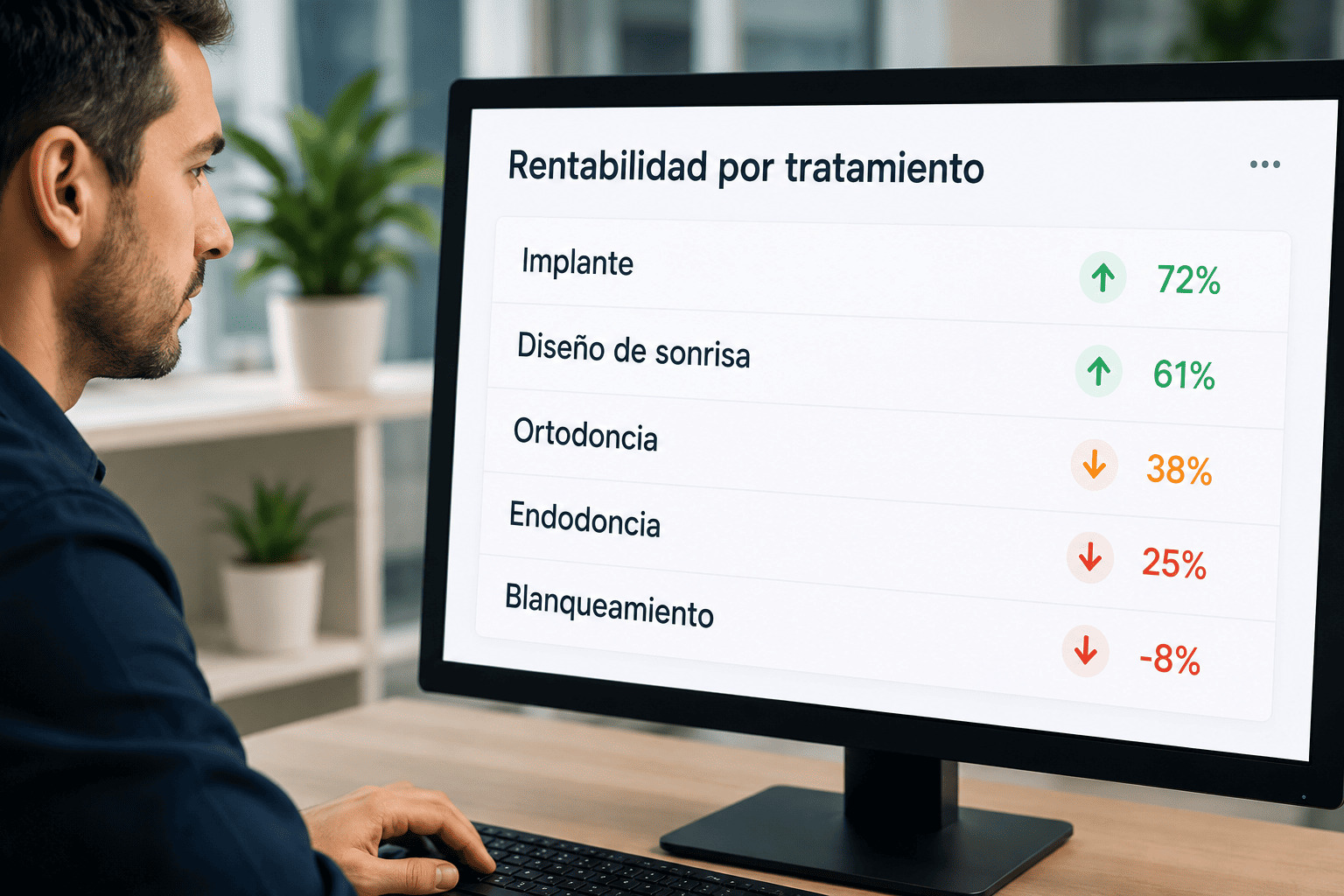
Why Procedure-Level Profitability Matters for Monthly Profit
Monthly profit is built from the profitability of individual procedures. If several common treatments generate weak margins, the practice may struggle even when the schedule is full.
To understand monthly profit properly, owners should know:
This helps identify which procedures strengthen the practice and which ones quietly reduce monthly profit.
Warning Signs Monthly Profit Is Too Low
A practice may not know its ideal monthly profit target, but several signs suggest profitability is weaker than it should be.
These warning signs usually indicate that the practice needs better insight into costs, pricing, overhead, procedure margins, or cash flow.
So, How Much Monthly Profit Should a Dental Practice Make?
There is no universal monthly profit number that applies to every dental practice. A healthy amount depends on the size of the practice, cost structure, number of providers, owner goals, location, growth plans, and reinvestment needs.
The better question is whether monthly profit is enough to:
A financially healthy practice does not chase a generic benchmark. It understands its own economics and builds profit goals around real costs, margins, and future plans.
How Klynic Helps Dental Practices Understand Monthly Profit
Klynic helps dental practices understand the numbers behind monthly profit, including treatment costs, overhead, chair time, provider compensation, pricing, and procedure margins.
With Klynic, you can:
Instead of relying only on production reports, Klynic helps practice owners understand whether their revenue is turning into real, sustainable profit.
Final Thoughts
Monthly profit is one of the most important indicators of dental practice financial health. But it cannot be understood by looking at revenue alone.
To know whether monthly profit is strong enough, a practice needs visibility into expenses, owner compensation, overhead, pricing, chair time, and procedure-level profitability.
Once those numbers are clear, owners can make better decisions about fees, growth, reinvestment, and long-term sustainability.
The right monthly profit is the one that makes your practice sustainable
Klynic helps dental practices understand what they truly keep each month—and what decisions can improve margins, cash flow, and financial resilience.
How Klynic helps dental practices understand monthly profit
Klynic helps dental practices calculate true treatment costs, measure procedure margins, understand overhead, analyze clinical hour costs, and make pricing decisions based on real financial data.
- True cost per procedure
- Monthly overhead visibility
- Profitability by treatment
- Pricing and margin analysis

Understand how much profit your dental practice actually keeps
Klynic helps dental practices move beyond revenue and understand the costs, margins, overhead, and pricing decisions that determine real monthly profit.
Request a free demo