
Dental Practice Break-Even Point: How to Calculate It
A practical guide to understanding how much your dental practice must produce before it starts generating real profit.
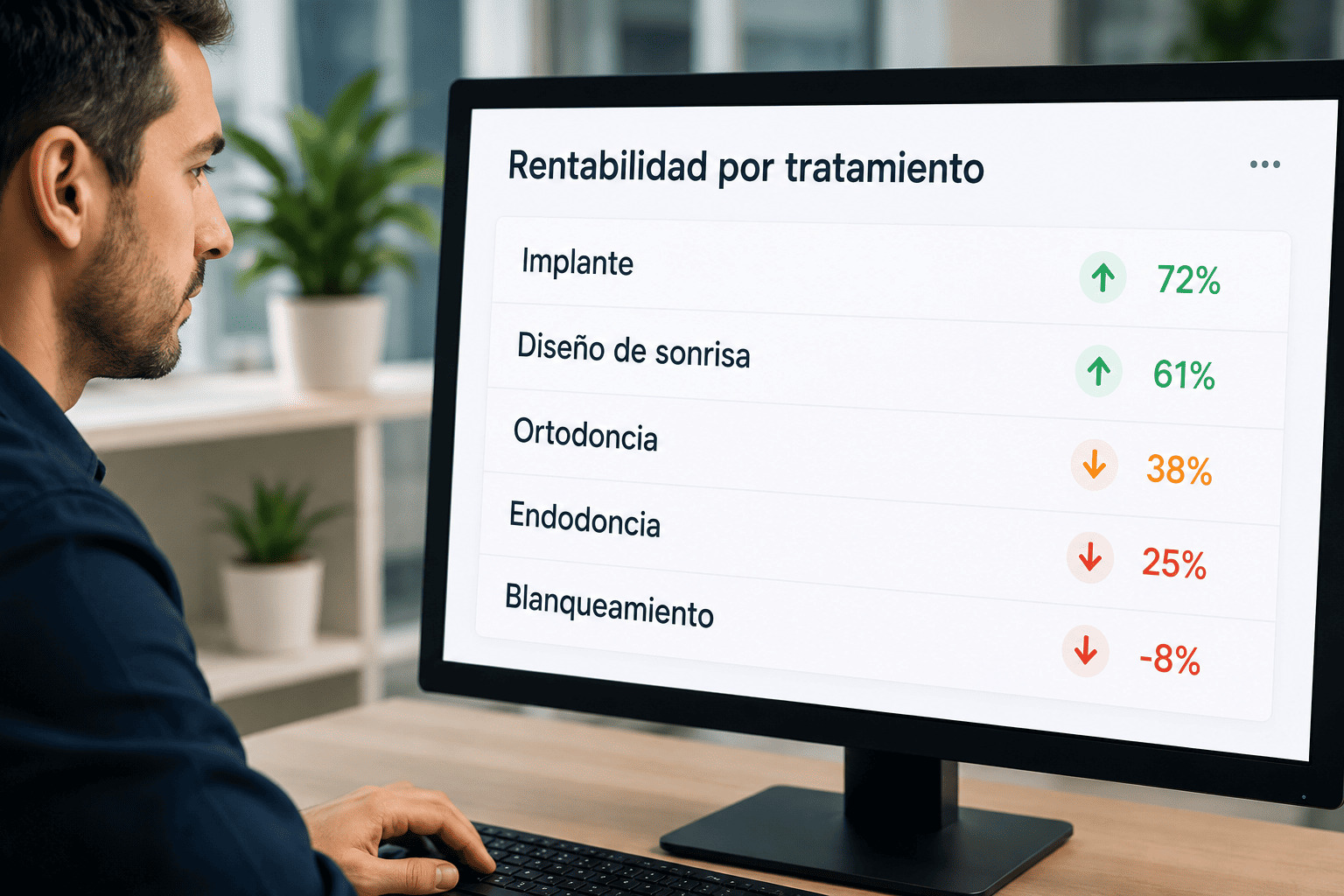
Every dental practice has a point where revenue finally covers the cost of operating the business. Before that point, the practice is only paying for its expenses. After that point, it starts generating real profit.
That point is called the break-even point. And while many practice owners have a general feeling for how much they need to produce each month, far fewer know their real break-even point with confidence.
Understanding this number can completely change how a practice thinks about pricing, overhead, productivity, treatment planning, and growth.
Break-even is the line between covering costs and creating profit
The fixed and variable expenses required to operate the practice.
The amount each treatment contributes after its variable costs are covered.
The money generated after the practice has passed break-even.
What Is the Break-Even Point in a Dental Practice?
The break-even point is the amount of production or revenue your practice needs before it starts generating profit.
In simple terms, it answers this question: how much does the practice need to produce just to cover its costs?
Once the practice passes break-even, additional profitable production begins contributing to owner income, reinvestment, reserves, and growth.
Why Break-Even Point Matters
A dental practice can be busy and still financially fragile if it does not know how much production is required to cover its real cost structure.
Knowing your break-even point helps answer questions such as:
Without this visibility, production goals can become arbitrary and pricing decisions may not reflect the real economics of the practice.
A production target is not enough
The practice needs to understand whether that production actually covers costs and generates enough margin to support sustainable growth.
Fixed Costs: The Expenses You Must Cover Every Month
Fixed costs are expenses the practice must pay whether the schedule is full or empty. These costs create the financial baseline the practice must cover before it can generate profit.
Common fixed costs include:
The higher your fixed costs, the more production your practice needs before reaching break-even.
Variable Costs: The Costs That Change With Treatment Volume
Variable costs increase as the practice performs more procedures. They are usually tied directly to treatment delivery.
Examples include:
These costs matter because a treatment does not contribute its full fee toward covering overhead. It only contributes what remains after its variable costs are paid.
The Break-Even Formula
The basic break-even formula is simple: fixed costs divided by contribution margin.
Break-even point = Fixed costs ÷ Contribution margin
Contribution margin is the amount left from a procedure after variable costs are subtracted from the fee.
For example, if a procedure fee is €500 and variable costs are €200, the contribution margin is €300. That €300 helps cover fixed costs. Once fixed costs are covered, future contribution margin becomes profit.
This is why two procedures with the same fee can affect break-even very differently if their variable costs, chair time, or provider compensation are not the same.
Why Procedure-Level Break-Even Matters
Many practices calculate break-even only at the overall business level. That is useful, but it can hide the fact that some treatments help the practice reach break-even faster than others.
At the procedure level, the practice should understand:
A high-fee treatment may not contribute much toward break-even if it has high lab costs, specialist fees, or long chair time. A lower-fee procedure may contribute more efficiently if it has strong margins and uses less clinical capacity.
Break-even is not only about how much you sell
It is also about how much each treatment contributes after its real costs are paid.
Common Break-Even Mistakes in Dental Practices
Break-even analysis can become misleading if the wrong numbers are used. Many practices underestimate their break-even point because they do not include the full cost of delivering care.
Common mistakes include:
When these mistakes happen, the practice may believe it is profitable earlier than it actually is.
How to Improve Your Break-Even Point
Improving break-even does not always mean working more hours or seeing more patients. Often, the most powerful improvements come from better margins, better pricing, and better resource allocation.
Useful strategies include:
The goal is not only to reach break-even faster. The goal is to create enough margin after break-even to make the practice financially stronger.
Break-Even Point and Practice Growth
Growth changes break-even. Hiring new team members, adding technology, increasing marketing spend, or expanding into a larger space can all raise fixed costs.
That does not mean growth is bad. It means the practice needs to understand how much additional profitable production is required to justify the new cost structure.
The practice may need less production to reach break-even.
The practice needs enough additional contribution margin to make growth profitable.
Healthy growth is not just more revenue. Healthy growth means the practice can cover the new cost structure and still improve profit.
How Klynic Helps Dental Practices Understand Break-Even Point
Klynic helps dental practices understand the financial logic behind pricing, procedure costs, margins, and profitability.
With Klynic, you can:
Instead of guessing whether your practice is producing enough, Klynic helps you understand whether treatments, prices, and margins support real profitability.
Final Thoughts
The break-even point is one of the most useful financial concepts for dental practice owners. It shows when the practice stops covering costs and starts creating profit.
But accurate break-even analysis requires more than knowing monthly expenses. It requires understanding fixed costs, variable costs, contribution margins, procedure profitability, and pricing.
When those numbers are clear, practice owners can set better goals, make smarter pricing decisions, and grow with more confidence.
Your break-even point should not be a guess
Klynic helps dental practices understand the costs, margins, and treatment economics that determine when the business actually starts generating profit.
How Klynic helps dental practices understand break-even point
Klynic helps dental practices calculate true treatment costs, understand contribution margins, analyze overhead, identify underpriced procedures, and make pricing decisions based on real financial data.
- True cost per procedure
- Minimum profitable fee
- Contribution margin visibility
- Pricing and profitability scenarios

Understand when your dental practice actually starts making profit
Klynic helps dental practices move beyond production targets and understand the costs, margins, and pricing decisions that determine real profitability.
Request a free demo