
How to Calculate the Cost per Clinical Hour in a Dental Practice
A practical guide to one of the most important financial metrics in dentistry: the real cost of operating one clinical hour.
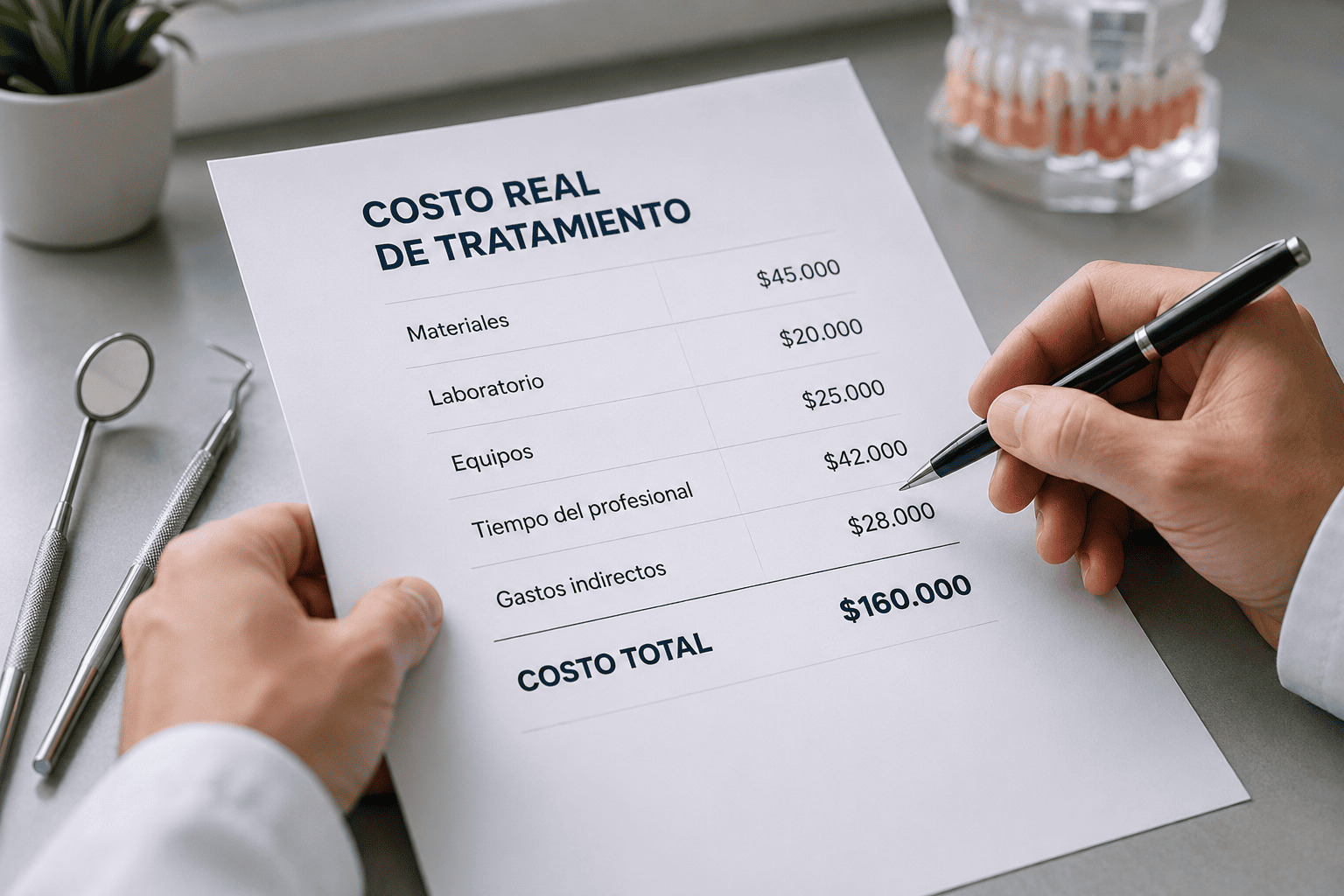
If there's one financial metric that can completely change how a dental practice makes business decisions, it's the cost per clinical hour. Yet surprisingly, very few dentists know what theirs actually is.
Most practice owners know their monthly production. They know what they charge for a filling, a root canal, or a dental implant. But when they're asked one simple question, the answer is often far less certain: how much does one hour of clinical operation actually cost my practice?
That number is far more important than most dentists realize. Almost every procedure consumes chair time. If you don't know the financial value of that time, it's extremely difficult to calculate treatment costs accurately, establish profitable fees, or evaluate the profitability of your services.
One clinical hour can change every financial decision
What one hour of production may generate.
What it may cost to keep that hour running.
What actually remains after the clinical hour is paid for.
What Is the Cost per Clinical Hour?
Simply put, the cost per clinical hour represents how much your practice spends to keep one hour of patient care operational.
In other words: how much does it cost to keep your treatment rooms, staff, equipment, and infrastructure running for one clinical hour?
Knowing this number helps answer critical business questions such as:
Without this information, many financial decisions rely more on intuition than on facts.
Fees are based on habit, market perception, or what other practices charge.
Fees are based on the real cost of delivering clinical care.
The Most Common Mistake: Thinking Clinical Hour Cost Is Just the Dentist's Salary
When many dentists try to calculate this metric, they focus only on their own compensation. In reality, every clinical hour includes much more.
For example:
All of these expenses continue whether you're performing a simple filling or a complex implant procedure. That's why the true cost of a clinical hour is often much higher than most dentists initially expect.
Most practices underestimate this number
A clinical hour is not only the dentist's time. It is the combined cost of people, rooms, equipment, technology, administration, utilities, and patient acquisition.
Why Is This Metric So Important?
Imagine two procedures that appear to generate similar profits. One requires 30 minutes of chair time. The other requires three hours.
Without knowing the cost of each clinical hour, it's impossible to determine which treatment actually creates more value for the practice.
That's why financially successful dental practices evaluate profitability not only by procedure—but also by the amount of clinical time each procedure consumes.
Same revenue does not mean same value
A procedure that occupies the chair for three hours must be judged differently from one that takes thirty minutes, even if both look profitable at first glance.
What Contributes to the Cost per Clinical Hour?
Practice Facilities
Every dental practice requires physical space to operate. These costs include:
These costs exist whether patients are scheduled or not.
Operating Expenses
Everyday operational costs include:
Individually these expenses may seem modest. Together they represent a significant portion of your operating costs.
Team Members
Running a practice usually involves much more than the dentist alone. Your clinical hour may include:
The cost of every team member should be allocated across the hours that are actually available for patient care.
Equipment and Maintenance
Modern dentistry depends on expensive equipment that requires ongoing investment. Examples include:
Depreciation, maintenance, and replacement costs all contribute to the true cost of every clinical hour.
Marketing and Patient Acquisition
Many practices forget to include marketing costs in their calculations. But attracting patients requires investment.
That may include:
Without patients, there are no clinical hours to sell. These expenses are part of the real cost of operating your practice.
The hidden structure behind one clinical hour
Clinical hour → dentist → assistant → treatment room → equipment → utilities → software → rent → marketing → actual cost.
The Problem with Using Scheduled Hours Instead of Productive Hours
This is one of the most common calculation mistakes. Many practices estimate their cost per clinical hour by dividing monthly expenses across every scheduled working hour.
For example:
The theoretical clinical capacity of the practice.
The assumed working month used in many calculations.
The number many practices incorrectly use as the denominator.
Unfortunately, that's rarely what happens in reality. Practices also experience:
The most financially sophisticated practices calculate their costs using productive clinical hours, not simply scheduled hours. That difference alone can dramatically change the final result.
Scheduled hours can hide the real cost
If expenses are divided by 176 scheduled hours but the practice only produces 137 real clinical hours, the calculated cost per hour will be artificially low.
Why Can Two Practices Have Completely Different Clinical Hour Costs?
Imagine two practices with similar patient schedules. From the outside, they appear nearly identical. Yet one practice has:
Although both practices operate the same number of hours, their cost per clinical hour may be dramatically different. That's why copying another practice's fees is rarely a sound pricing strategy.
More rent, staff, technology, marketing, or empty chair time.
Different expenses, utilization, staffing, and operational model.
How Clinical Hour Cost Affects Every Procedure
Nearly every treatment depends on this metric. Whether you're performing:
A procedure requiring four hours of chair time naturally consumes far more resources than one completed in thirty minutes. If those differences aren't reflected in your cost calculations, profitability can become seriously distorted.
Why Manual Calculations Become Difficult
Although the concept seems straightforward, calculating an accurate clinical hour cost quickly becomes complicated.
Especially when practices include:
As complexity increases, many practices stop using precise calculations and begin relying on estimates instead.
Why spreadsheets eventually become unreliable
Initially, manual calculations may work. But as providers, locations, schedules, overhead, and expenses change, maintaining accurate numbers becomes increasingly difficult.
So, What Should Your Cost per Clinical Hour Be?
The honest answer is: there is no universal number.
Every dental practice has its own operating model, cost structure, and staffing strategy. What's important isn't comparing your number with another practice. What's important is using a consistent methodology based on accurate, up-to-date financial data.
Only then can you:
How Klynic Helps You Calculate Your Cost per Clinical Hour
At Klynic, we believe dentists should understand the true cost of operating their practice without relying on complex spreadsheets. That's why we developed a financial intelligence platform designed specifically for dental practices.
With Klynic, you can:
Our goal isn't simply to tell you what one clinical hour costs. Our goal is to help you understand how that single metric influences the profitability of your entire practice.
Final Thoughts
The cost per clinical hour is one of the most valuable financial metrics in dentistry. Yet it's also one of the least understood.
Knowing what it truly costs to operate one hour of patient care allows you to price treatments more accurately, build healthier profit margins, and make better business decisions.
Because ultimately, the financial success of a dental practice isn't determined only by how much revenue it generates. It's determined by how efficiently it turns every clinical hour into sustainable profit.
Every treatment uses clinical time. Every clinical hour has a cost.
If you don't know that number, you're making financial decisions without one of the most important metrics in your practice. Klynic calculates it automatically.
How Klynic helps you calculate your cost per clinical hour
Klynic helps dental practices understand the real cost of operating every clinical hour, including facilities, staffing, operating expenses, productivity, and overhead allocation.
- Automatic clinical hour cost calculation
- Practice capacity and productivity analysis
- Overhead and staffing allocation
- Procedure profitability based on real data

Discover the true cost of every clinical hour
See how Klynic helps dental practices calculate clinical hour costs, analyze profitability, optimize pricing, and make every treatment decision based on accurate financial data.
Request a free demo